
How to Cross Train for Competitive Swimming
Swimming World Magazine explains that swimmers can reap major benefits in the pool from strength and cross training on land. With so many options, it is important to evaluate the type of exercise you are doing out of the pool to ensure it will best benefit your stroke rate, pull, and kick.
Yoga
Yoga done by itself is a great workout. Yoga is an excellent training addition for competitive swimmers because its movements yield flexible muscles with a very wide range of motion. Yoga also helps work out the muscles in the upper back and shoulders, where swimmers typically experience pain from their repetitive swimming motions. Yoga emphasizes controlled breathing, an essential part of every swimming stroke. Swimming and yoga are more alike than you might think, and they are great complements to each other when it comes to your training.
Running
UnderWater Audio explains that any type of running is beneficial to swimmers. This could be distance running, hill training or anything in between. Because runners tend to have lean, muscular bodies, they are ideal candidates for swimming as well. Running also promotes mental stamina, since it is physically grueling and repetitive, much like swimming. Building mental strength and choosing to keep going after exhaustion will generate discipline in the pool.
Water Polo
This one may seem like a no-brainer but water polo is a great complement to swimming. Aside from the obvious (swimming), it helps the swimmers get a good feel of how their bodies move in the water. It can also help strike a balance between keeping a swimmer in the pool year round, but not making them swim monotonous laps year round.
Swimmers are some of the hardest working athletes, and sometimes they need a break. Instead of sitting on the couch catching up on shows, swimmers are urged to get involved in cross-training. Yoga, running and water polo are all amazing accompaniments to competitive swimming.

Benefits of Traveling
We all know that travel is good for us, but have you ever pondered exactly why? What does travel do to us? Traveling the world isn’t just fun and exciting; there’s abundant research to suggest it’s highly beneficial for your physical, mental and emotional health as well.
Shifts Your Perspective
Traveling has a way of shifting your perspective. The Chopra Center explains that travel broadens your perspectives, not only of the world around you but also of yourself. When traveling you frequently find yourself in situations that you wouldn’t be in otherwise. You are faced with the reality of living outside your comfort zone, which, although uncomfortable, provides you with great opportunities.
Increases Emotional Stability
Traveling also helps to increase emotional stability. Since traveling helps put life into perspective, it also has the byproduct of making you less anxious when it comes to changes in your day-to-day life. Instead of approaching these changes with unease and angst, travelers are more open and willing to accept things that deviate from their daily routine.
Provides a Sense of Accomplishment
Finishing a trip gives you the satisfaction that you were able make a goal to travel and accomplish what you set out to do. Humans crave a sense of accomplishment and travel provides just that.
Relieves Stress
Although missing a connecting flight or losing baggage in a foreign airport is sure to boost your anxiety, traveling has been scientifically proven to lower stress levels, and rather dramatically. NBC reports that three days after taking a vacation, travelers report feeling less anxious, more rested and in a better mood. Interestingly, these benefits tend to linger for weeks after the trip has ended.
Traveling is more than just fun. It has numerous health benefits as well. From shifting your life perspective to increasing emotional stability, travel is a great boost to your life!
To Train For Open Water, or Closed Water—That is The Question.
Freestyle swimming is often analyzed to the very bone. Names like Michael Phelps and Ryan Lochte have been the subject of countless replays while swimming instructors and coaches alike look on and preach of their impeccable technique. While these world-class athletes have undoubtedly proved themselves the very best in their field, it is worth wondering: what if they were not in a closed pool?
What if they were victims to mother nature’s unpredictable surges and wind storms? How would their flawless freestyle translate to white-capped waters and projectile rain drops? That’s the difference between “swimmers” and “triathletes.” Well, that and a couple more sports, anyway.
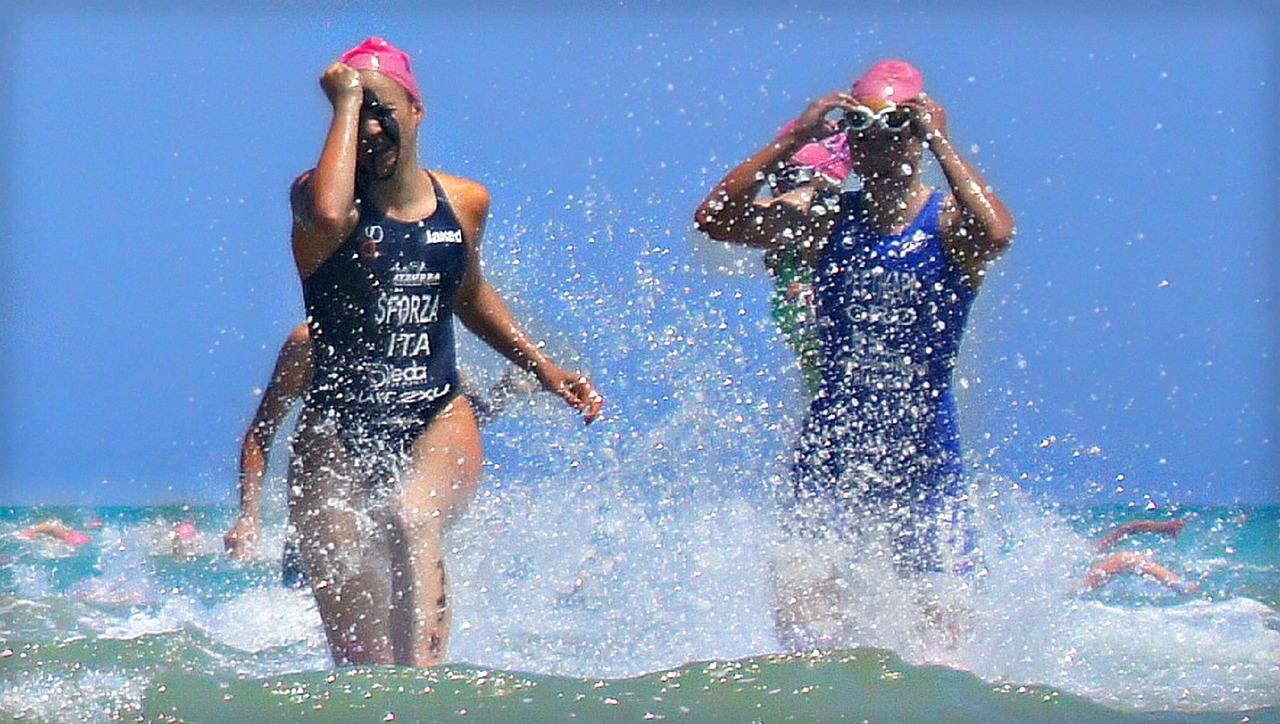
Where swimmers train for a controlled environment, triathletes train for everything from a placid lake to a wind-torn ocean. While swimmers develop a very consistent stroke designed for maximum efficiency through a water with no current, triathletes train to change technique from race to race, ready to cope with whatever water conditions happen to be present. Some triathlete variations include but are not limited to single-sided breathing away from chop, high hand recovery over waves, and short or compressed strokes when surrounded by others.
One particularly notable technique is bilateral breathing. Bilateral breathing is when swimmers consistently switch between sides to keep breathing while racing. Although some may merely play to their dominant side, it is of the utmost importance for triathletes to feel comfortable breathing to both their dominant and their less dominant side. Unforeseen water and weather conditions often dictate which sides triathletes can turn to to breathe, so it is exceptionally significant triathletes be able to use both sides.
Another specific technique worth noting is low-profile breathing. While this is fantastic for strictly closed pool swimmers, it isn’t always possible in open choppy waters. Many coaches refer to low-profile breathing as ‘one goggle in, one goggle out’ breathing, for those unaware of the term ‘low-profile breathing.’ One option for triathletes is to either breathe with a higher profile or to run your face slightly backward into your armpit to find a clean breath of air.
Swimming for open waters better prepares you for swimming overall. When you begin your training regimen, consider your ultimate goal and your current training technique. Although some may think swimming is just swimming, you can in fact take a number of steps to prepare yourself for specific circumstances.

Retired Navy Admiral Mark Heinrich is a dynamic leader in the global supply chain industry who is devoted to a number of exciting hobbies. As a longtime member of the Navy, he is a dedicated athlete and still remains very focused on health and fitness after more than three decades in the service.
Admiral Mark Heinrich has a long history as a swimmer, spanning about 35 years. He swam in high school and in college, and for all four years of his college career he placed in the top 25 backstroke swimmers in the country. He was also the captain of his swimming team in 1979. Since then he has competed as a master swimmer and has been a member of multiple fantastic teams around the country. Mark blogs about competitive swimming on his website, AdmiralMarkHeinrich.com and MarkHeinrich.com. He believes that the lessons he has learned from competitive swimming have guided him in his career and he is forever grateful for that.
Admiral Mark Heinrich is an active member of many nonprofits and charities and is also a former member of nonprofit organization U.S. Masters Swimming (USMS) in the Gold Coast of Florida. He holds a pool relay record and has achieved All American Honors in long distance and pool swims. One of Mark’s favorite experiences is when he swam the Maui Channel.
Nowadays, although everyone in his age group tends to swim for fitness alone, Mark Heinrich continues to have the competitive spirit that inspired him to join the Navy and made him stand out from the start. Mark begins every day the same way. He swims every morning with the Fort Lauderdale Swim Team, and what truly motivates Mark to swim is the sense of camaraderie. He enjoys working with teams, spending time with like-minded athletes, and learning improvement techniques from others.
“Drive and discipline are the most important part of becoming a master swimmer,” Admiral Mark Heinrich explains. The sport requires the motivation to prioritize and, plain and simple, get started early in the morning. Mark enjoys seeing the sun rise every day as he swims laps. To him, there is no better start to a day.
In addition to swimming, Admiral Mark Heinrich is passionate about numerous other nonprofits which help people succeed and pursue their careers. He is a volunteer for Mission: Readiness, a national security nonprofit which encourages physical activity, reduces violent crime, and improves the quality of education (and thus graduation rates) for young people. He is also a former member of the Committee for Purchase from People Who Are Blind or Severely Disabled, an agency which administers the AbilityOne employment program.
Admiral Mark Heinrich prides himself on being able to give back to the community which has already given him so much. The only way anyone can truly make a difference is by standing beside someone else, for it is only together that long lasting and meaningful change can be instituted in our perpetually changing world. Mark believes this change is rooted in education, for is education that will allow individuals to better their own lives, to depend on themselves instead of others, and to ultimately take charge of their own destiny. It was this understanding and the ensuing discipline that came as a result that has helped elevate Mark to where he is today.
Admiral Mark Heinrich proudly serves an advisor for multiple supply organizations, including The Louisiana International Gulf Transfer Terminal. He has given keynote speeches and presentations as a member of organizations like the Navy League of the United States. With over three decades of expertise as a supply corps officer, he provides the insight and the logistical background that organizations need to thrive.
Mark also uses his logistical background to support financial programs for current and former Navy members through the Navy Federal Credit Union. He is passionate about making lifetime financial services accessible to all Navy veterans.